
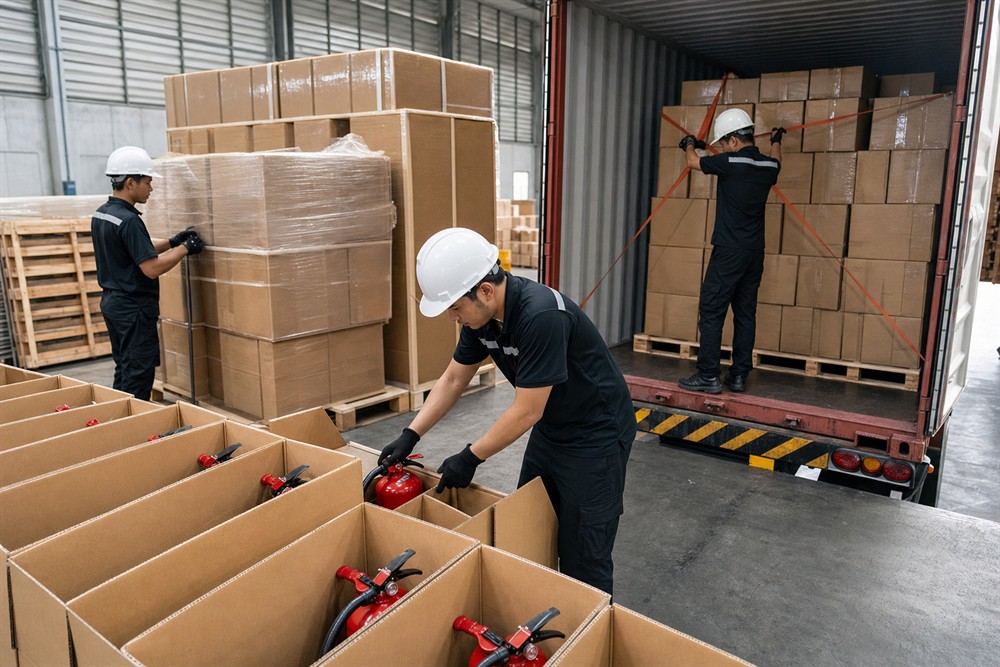
Export packaging is part of fire extinguisher quality. A cylinder can leave the production line in perfect condition and arrive with scratched paint, bent handles, damaged gauges, crushed cartons, missing accessories, or unreadable labels if the pack and container plan are weak.
Good packaging protects the product, supports efficient handling, and makes the landed cost predictable. It should be approved before mass production, not improvised during loading.
Map the Risks Along the Shipping Route
Consider every handling stage: factory storage, truck transport, port handling, container loading, ocean movement, unloading, destination warehousing, and local distribution. Vibration, compression, impact, moisture, heat, abrasion, and repeated manual handling can affect the pack.
The packaging level for a full-container distributor shipment may differ from mixed cargo or courier samples, where individual cartons experience more handling.
Design the Individual Carton Around the Product
The carton should fit the extinguisher, valve, hose or horn, bracket, and documents without harmful pressure points. Internal dividers or molded protection can keep metal parts from contacting the cylinder coating. The base and valve area usually need particular attention.
Items to confirm
- Board grade and carton construction
- Internal protection and product orientation
- Valve, gauge, lever, hose, and horn clearance
- Accessory and manual placement
- Closure method and tamper evidence where required
- Carton dimensions, gross weight, and handling marks
Printed information should match the product, purchase order, and destination requirements. Approve artwork and a physical packing sample before printing the complete quantity.
Use Master Cartons and Pallets Deliberately
Small models may be packed in master cartons, while larger extinguishers are often handled individually or in purpose-designed group packs. Palletization improves mechanical handling but consumes space and adds material cost. Non-palletized loading can increase container utilization but requires careful stacking and unloading plans.
If pallets are used, confirm dimensions, treatment requirements, load height, corner protection, strapping, stretch wrap, and forklift access. Avoid strapping directly against painted cylinders or vulnerable carton edges.
Plan Container Loading With Real Carton Data
Loading quantity should be calculated from final packed dimensions and weights, not early estimates. A container plan should consider internal dimensions, payload, weight distribution, door clearance, stacking strength, product mix, unloading sequence, and any transport restrictions.
Mixed-capacity orders need a loading diagram. Heavy cartons should not crush lighter units, and the final rows must be restrained so the load does not shift when the doors open.
Control Moisture and Corrosion Exposure
Ocean transport can create condensation. Dry cartons, protected storage, suitable liners or moisture-control measures, and correct container condition reduce exposure. The appropriate solution depends on route, season, packaging, container type, and destination climate.
Inspect the container for holes, water ingress, contamination, damaged floors, protrusions, and door-seal problems before loading.
Document the Loading Process
Loading photos provide useful evidence. Record the empty container condition, container number, seal, first rows, intermediate rows, restraint method, final load, closed doors, and seal number. Keep packing lists and batch information linked to the shipment.
Account for Transport and Regulatory Requirements
Fire extinguishers are pressurized safety products. Transport classification, charging condition, documentation, labeling, and carrier acceptance must be confirmed for the exact product and route. Requirements can differ by agent, pressure, packaging, mode of transport, and jurisdiction.
Coordinate with a qualified freight forwarder and the relevant regulations before shipment. A manufacturer’s previous export experience is useful but should not replace current route-specific verification.
Packaging Approval Checklist
- Approved packed sample and drop or handling evaluation where specified
- Final carton artwork and barcode verification
- Gross weight and dimensions confirmed from production packaging
- Pallet and container plan approved
- Moisture and abrasion protection defined
- Loading photos and seal records required
- Transport documentation confirmed before dispatch
Packaging and loading should be treated as engineered parts of the product. The cost of better protection is often small compared with claims, rework, replacement freight, and delayed customer deliveries.