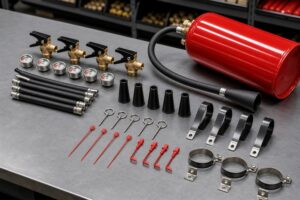

Fire extinguisher procurement planning for 2027 should begin before the final quarter of 2026 ends. Cylinders, valves, gauges, extinguishing agents, printed packaging, inspections, and shipping capacity each have their own lead times. A forecast that considers only finished-unit production can miss the real constraints.
A practical plan connects market demand, product mix, supplier capacity, compliance changes, working capital, and delivery windows.
Build the Forecast by Product Family
Separate demand by agent, capacity, standard, market, label, carton, and accessory set. Total annual units are not enough if the factory must manage different cylinders, valves, powders, artwork, or approval files.
Use historical sales, confirmed projects, distributor pipelines, replacement cycles, tender calendars, seasonality, and planned market expansion. Label assumptions as confirmed, likely, or speculative so purchasing does not treat every opportunity equally.
Translate Demand Into Material Requirements
Ask the manufacturer which materials drive lead time and MOQ. Custom cylinders, special valves, gauges, hoses, agents, printed labels, cartons, and pallets may need to be committed before the final assembly schedule.
Materials to review
- Steel and cylinder production capacity
- Valves, gauges, hoses, horns, brackets, pins, and seals
- Dry powder, CO2, foam, wet chemical, or other agents
- Custom labels, manuals, barcodes, and cartons
- Pallets, dividers, protective materials, and container space
Identify the Real Capacity Bottleneck
A factory may have high assembly capacity but limited cylinder welding, coating, pressure testing, filling, fire testing, or packaging capacity. Request a model-specific capacity view rather than one general monthly figure.
Discuss peak-season loading, planned maintenance, labor availability, subcontracted processes, and backup equipment. If several large buyers use the same approved components, component supply may be the limiting factor.
Plan Compliance and Artwork Changes Early
Review expiring certificates, surveillance activities, regulatory updates, importer details, language changes, barcodes, model revisions, and packaging claims. Artwork approval can delay production even when materials are ready.
Create a cut-off date for changes. Late revisions should trigger a documented assessment of existing materials, cost, delivery impact, and obsolete inventory.
Use a Rolling Order Strategy
A blanket forecast with scheduled releases can help reserve capacity while avoiding one large inventory arrival. The commercial arrangement should define what is binding, what remains forecast, material-commitment dates, cancellation terms, storage limits, and release windows.
Review the forecast monthly or quarterly. Update actual sales, project wins, stock, open orders, production, in-transit goods, and supplier constraints.
Include Inspection and Corrective-Action Time
Do not schedule inspection on the day the container must load. Allow time for production completion, document review, pre-shipment inspection, corrective action, reinspection if necessary, and final packing.
For a new model, new supplier, or major component change, plan additional sample and validation time before the commercial batch.
Model Shipping and Destination Inventory
Connect factory completion to booking, port cut-off, sailing schedule, transit, customs, destination handling, and distribution. Container availability and freight volatility can change the optimum order size.
Set safety stock by market risk and replenishment time rather than applying one percentage to every model. High-volume standard products, tender-specific units, and slow-moving spare parts need different policies.
Create a Supplier Planning Dashboard
- Forecast, confirmed orders, and actual sales by model
- Supplier material commitment and production status
- Capacity utilization and identified bottlenecks
- Approval, artwork, and sample status
- Inspection, corrective action, and release status
- Booked shipment, estimated departure, and arrival
- Destination stock and projected coverage
Questions to Review With the Manufacturer
- Which components have the longest lead times or highest MOQs?
- Which process limits output for each product family?
- How much notice is needed for peak-season orders?
- Which approvals, audits, or renewals are planned for 2027?
- How are substitutions and shortages communicated?
- What forecast or material reservation improves delivery reliability?
Good procurement planning creates options before capacity becomes scarce. By aligning the forecast with materials, compliance, inspection, and shipping, buyers can reduce urgent airfreight, stockouts, excess packaging, and last-minute substitutions throughout 2027.