Choosing a fire extinguisher manufacturer is not simply a matter of comparing unit prices. For an importer, distributor, or project supplier, the factory becomes part of the compliance, quality, delivery, and reputation chain. A low quotation can become expensive if documentation is incomplete, valves are inconsistent, cartons fail in transit, or production dates cannot be traced.
A structured qualification process helps buyers compare suppliers on evidence rather than sales claims. The goal is to identify a manufacturer that can repeatedly deliver the correct product for the destination market.
Start With the Destination Market and Application
Before requesting quotations, define where the extinguishers will be sold and how they will be used. Requirements for a European distributor may differ from those for a construction project in the Middle East, a vehicle program in South America, or a private-label retail range.
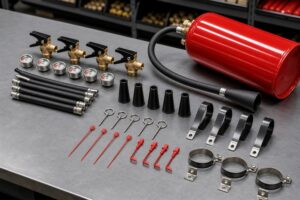
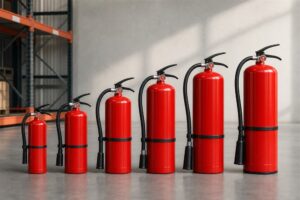
Your inquiry should identify the extinguishing agent, nominal charge, fire rating, cylinder type, operating temperature, valve material, hose or horn configuration, bracket, packaging, language, and required approval route. When this information is missing, suppliers may quote products that look similar but are not technically equivalent.
Verify Product and Factory Capabilities
Ask for model-specific evidence
A general company certificate does not prove that every extinguisher model is approved for every market. Request documents that can be matched to the exact model, capacity, agent, valve, and cylinder configuration under consideration. Confirm the certificate holder, factory address, validity, and scope.
Review the manufacturing process
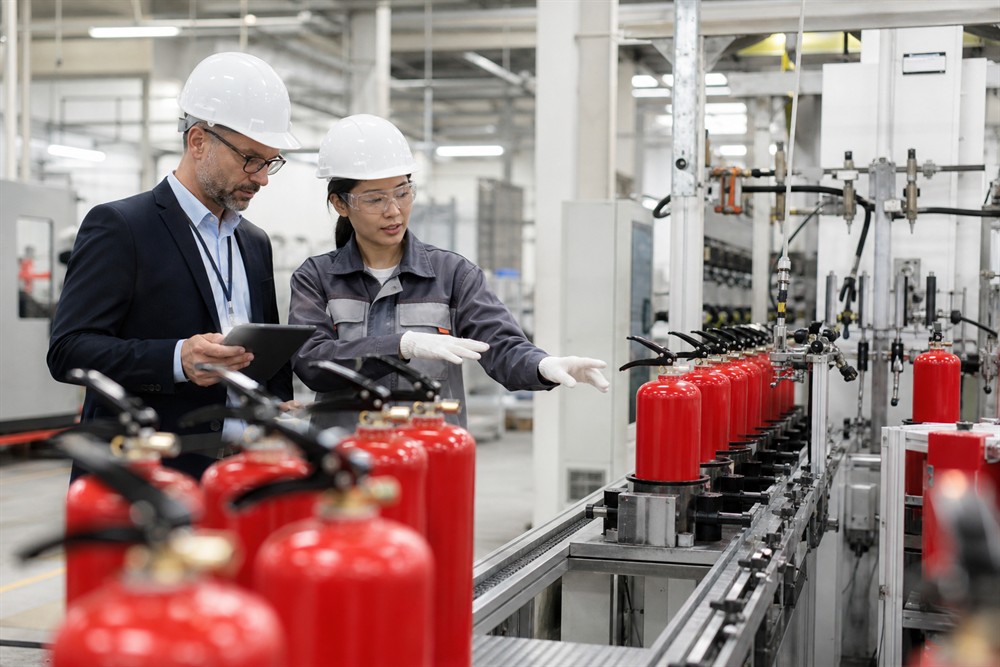
Determine which operations are performed in-house and which are outsourced. Important steps may include cylinder forming, welding, heat treatment where applicable, surface preparation, powder coating, pressure testing, agent filling, valve assembly, leak testing, labeling, and final inspection. Outsourcing is not automatically a problem, but responsibilities and incoming inspection must be clear.
Evaluate Quality Control at Critical Points
A capable manufacturer should be able to explain its control plan in practical terms. Buyers should look for documented checks rather than a single final inspection.
- Material identification and supplier records for cylinders, valves, agents, hoses, and gauges
- Dimensional and weld inspections during cylinder production
- Pressure or hydrostatic testing according to the applicable specification
- Filling-weight control and agent batch traceability
- Leak testing after valve assembly
- Sampling plans for discharge performance and fire testing where required
- Serial, batch, or production-date traceability on finished goods
Ask how nonconforming material is identified and isolated. A strong answer includes records, disposition authority, corrective action, and verification rather than simply saying defective units are removed.
Assess Export Experience Beyond the Product
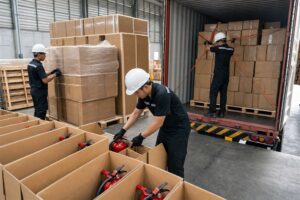
Fire extinguishers are pressurized safety products, so shipping preparation matters. The manufacturer should understand the documentation, packaging, marking, and transport requirements relevant to the chosen route and product configuration. Buyers should also confirm whether extinguishers will be shipped charged, uncharged, or with components separated, based on applicable transport rules and commercial needs.
Review carton strength, internal protection, pallet dimensions, moisture protection, loading method, and container utilization. Request photos or drawings of the proposed export pack before approving a large order.
Test Communication and Change Control
Good communication is measurable. The supplier should return a clear specification sheet, identify open questions, distinguish confirmed facts from options, and document revisions. When artwork, valves, gauges, agents, or cartons change, both parties should approve the updated specification before production.
A useful pre-production file includes the signed technical specification, approved sample or sample report, label artwork, carton artwork, inspection plan, packing method, and delivery schedule.
Use Samples and Pilot Orders Strategically
A visual sample alone is not enough. Evaluate dimensions, weight, finish, valve operation, gauge position, hose fit, safety pin, seal, bracket, labeling, packaging, and documentation. For a new supplier or new model, a controlled pilot order can reveal process and logistics issues before a full program launch.
A Practical Supplier Comparison Scorecard
Use a weighted scorecard so the lowest price does not automatically win. Suggested categories include product compliance, manufacturing capability, quality control, traceability, sample performance, export packaging, delivery capacity, communication, corrective-action responsiveness, and total landed cost.
The best fire extinguisher manufacturer is the one that can make the agreed product repeatedly, document what was made, protect it through transport, and support the buyer when questions arise. A disciplined qualification process creates a stronger supply relationship and reduces risk long after the first shipment.