International fire extinguisher sourcing involves several layers of standards, approvals, directives, and factory systems. Terms such as EN3, CE, UL, and ISO are often placed together in quotations even though they describe different things.
Buyers should treat compliance as a model-specific verification process. The correct evidence depends on the destination market, product type, capacity, extinguishing agent, and sales channel.
EN3 and the European Portable Extinguisher Framework
EN3 is a European series of standards addressing portable fire extinguishers. It covers areas such as construction, performance, fire testing, operating characteristics, and marking. A claim that a product is made “to EN3” should be supported by relevant test or certification documentation for the exact model and configuration.
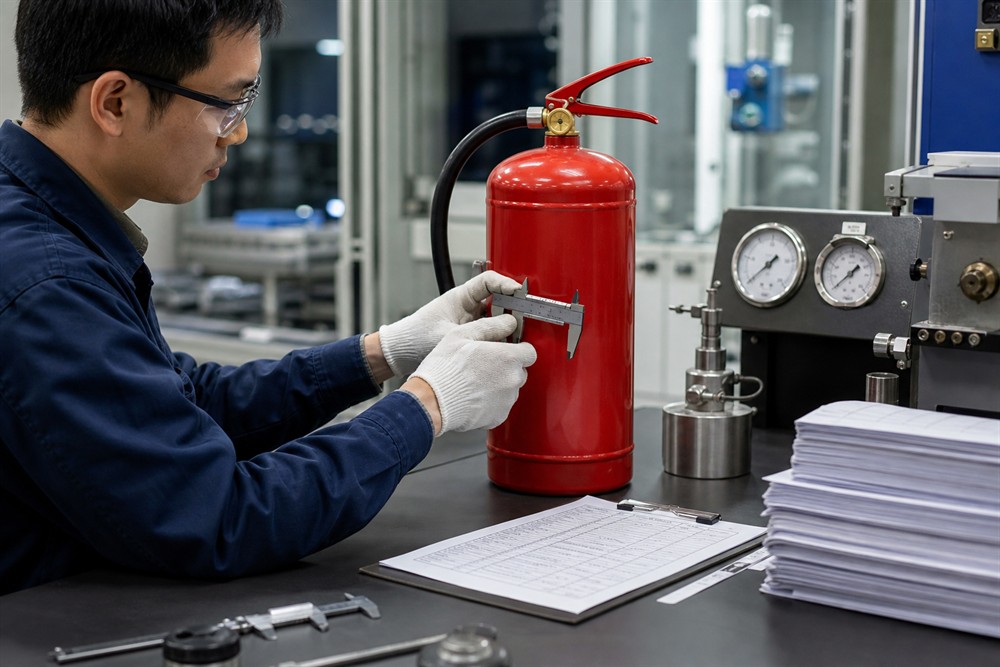
Buyers should compare the certificate or report with the offered cylinder size, agent charge, valve, hose or horn, fire rating, and production location. Changes to critical components can affect the validity of an approved configuration.
What CE Marking Does and Does Not Mean
CE marking indicates conformity with applicable European Union legislation for the product. It is not a universal quality award, and the applicable route depends on the product and pressure-equipment classification. Documentation may involve declarations, technical files, conformity-assessment procedures, and notified-body involvement where required.
Importers should identify which legislation applies, who carries each economic-operator responsibility, and which documents must accompany or remain available for the product. The label and declaration should be reviewed before mass printing.
UL Listings and North American Market Requirements
UL-related claims require careful model verification. A listing normally applies to defined products made under controlled conditions and subject to follow-up requirements. Similar appearance does not establish equivalence.
For a North American program, check the listing record, model designation, rating, instructions, markings, components, and factory information. Also determine whether additional national, state, provincial, distributor, or project requirements apply.
ISO Management Systems Are Different From Product Approval
An ISO 9001 certificate relates to a quality management system. It can indicate that the factory has documented processes for areas such as document control, purchasing, production, inspection, corrective action, and continual improvement. It does not by itself certify a fire extinguisher model.
Use management-system certification as one part of supplier evaluation, then verify product compliance separately.
Build a Model-Specific Compliance File
Request the right documents
- Certificate or listing documents for the exact model
- Test reports and fire-rating evidence where applicable
- Drawings and bill-of-material details for controlled components
- Declaration documents required by the destination market
- Label, instruction, and packaging artwork
- Factory quality-system certificate and scope
- Routine production and inspection records
Check consistency across the file
The model name, certificate holder, manufacturing address, capacity, agent, pressure, temperature range, rating, valve, and markings should agree. If a document references a different model or factory, ask for clarification before treating it as evidence.
Control Changes After Approval
Compliance risk often appears after the first sample. A substitute gauge, valve, hose, powder supplier, label material, or cylinder process may seem minor but can affect an approved product. Establish a written change-control rule requiring buyer approval and, where necessary, review by the certification body before implementation.
Golden samples, signed specifications, controlled artwork, and revision histories help purchasing, production, and inspection teams work from the same baseline.
Common Red Flags for Importers
- A certificate is provided without a matching model number
- The factory name or address differs without explanation
- A supplier treats ISO 9001 as product certification
- Approval marks are offered as optional artwork without evidence
- Key components change between the sample and quotation
- The supplier cannot explain routine production tests or traceability
Standards and regulatory requirements change, and their application can vary by jurisdiction. Buyers should confirm the current legal and certification route with qualified local professionals or the relevant authority. A responsible manufacturer supports that process with accurate, model-specific evidence rather than broad marketing claims.